CLIENT
Ford Pro
SERVICES
Design Research & Design Strategy
Context
To showcase the power of co-creation and build credibility for our newly launched Innovation Lab, we partnered with a leading construction and engineering firm on a pilot engagement.
After a joint kickoff workshop, both organizations aligned on a shared priority: improving job site safety for drivers and operators. This became the focus of our collaborative design sprint, marking the first public-facing application of our partner engagement model.
Challenge
Construction job sites are complex environments where safety depends on coordination across equipment, people, processes, and unpredictable conditions. While both organizations had deep expertise in their respective domains, neither had a complete picture of the daily safety experience from the perspective of drivers and operators on the ground.
The challenge wasn't just about building better vehicles or implementing stricter protocols—it was about understanding the human behaviors, friction points, and systemic gaps that create risk. To design meaningful interventions, we needed to move beyond assumptions and uncover the realities of what workers face every day.
How might we co-create safety solutions that address real operational challenges, build trust between partners, and demonstrate the value of our innovation lab model?
Outcome
In 5 months, we generated multiple patent-pending concepts as a direct result of the collaboration. The partner organization and Ford strengthened their relationship and expanded their innovation lab model, creating a foundation for future co-creation.
This project validated co-creation as a high-yield method for surfacing latent opportunity areas within safety, operations, and equipment management. The concepts and frameworks developed influenced future product development, demonstrating the long-term impact of early-stage collaborative design.
Approach
Co-Creation Through Workshops and Collaborative Synthesis
We brought together cross-functional teams from Ford and our partner organization for a multi-day workshop to align on user needs, technical constraints, and shared goals. Through facilitated exercises and collaborative analysis, we synthesized insights into five actionable opportunity areas—each anchored in a key theme.
Our five opportunity areas:
Go home, better than you came – Enhancing physical and mental well-being on job sites
Pre-Flight Checklist – Streamlining safety prep and reducing admin burden
Construction is the extreme of durability – Designing for harsh conditions and minimizing downtime
Strive for Predictability – Improving uptime, scheduling, and service forecasting
Evolving Business Needs – Futureproofing for fleet growth and digital tool integration
The workshop became a model for how co-creation could drive alignment, accelerate decision-making, and build early trust in the innovation lab approach.
Understanding Current State
To uncover the realities of construction job site safety, we created a research workbook tailored specifically for construction craft workers and supervisors. This field-based tool made it easy for participants to share real-world moments without requiring a formal interview.
The workbook captured personal reflections, team dynamics, and safety-related habits across a full day in the life. Our team then synthesized responses into a detailed journey map, surfacing key friction points, time pressures, and behavioral risks that often go unspoken.
This approach helped build early trust with partner employees and created a shared understanding of the daily safety experience that grounded all future co-creation efforts.
Understanding the Business Model and Ecosystem
To uncover meaningful innovation opportunities, we needed to deeply understand how construction job sites function—not just from an operational standpoint, but across equipment, software, human roles, and informal routines.
We mapped the ecosystem through two lenses:
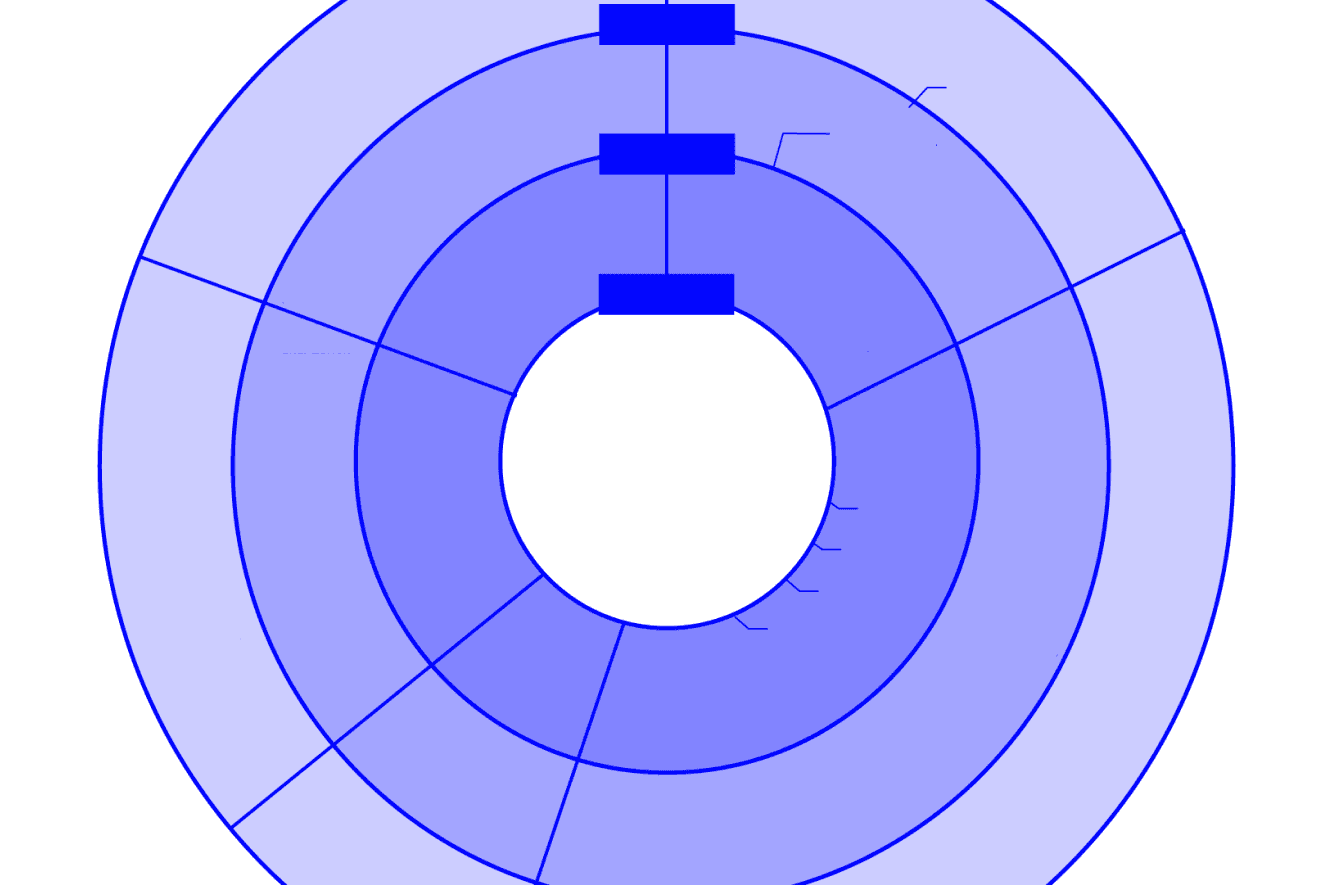
Ecosystem of Influence: A circular map highlighting the tools, machines, vehicles, accessories, and systems that directly or indirectly impact safety on the job site
Organizational Structure: A detailed chart showing formal and informal reporting relationships, including craft-level safety roles that shape on-the-ground behavior
These visual frameworks allowed both our team and our partner organization to align around shared context and uncover where interventions would be most impactful.
Strategic Levers
Research as Trust-Building
Creating a field-based workbook for construction workers demonstrated respect for their time and expertise. This participatory approach surfaced insights that traditional interviews would have missed and built credibility early.
Journey Mapping to Surface Systemic Risk
Synthesizing individual responses into a holistic day-in-the-life journey revealed patterns across roles and highlighted friction points that were normalized but addressable.
Ecosystem Thinking Over Point Solutions
Mapping the full ecosystem of influence—equipment, software, roles, routines—ensured that solutions addressed root causes rather than isolated symptoms.
Co-Creation as Alignment Mechanism
Multi-day workshops with cross-functional teams from both organizations accelerated decision-making, created shared ownership, and generated actionable opportunity areas anchored in real user needs.
Translating Insights to Intellectual Property
Moving quickly from synthesis to concept development resulted in multiple patent-pending concepts, demonstrating the tangible business value of the innovation lab model.
Long-Term Product Integration
The concepts developed during this sprint influenced future product development strategy, proving that early-stage co-creation can deliver sustained value beyond the initial engagement.